
What is EMDR?
EMDR (Eye Movement Desensitization and Reprocessing) is a therapy modality founded by Francine Shapiro. EMDR uses bilateral stimulation, often through eye movements, tapping, or sound tones to help keep us anchored in the present moment while gently engaging with a past experience, memory, or emotionally charged material.
This process allows both mind and body to reprocess what may still feel “stuck,” whether that shows up as negative self-beliefs, body sensations, distressing images, or looping patterns of thought. Through this work, people may experience shifts in the nervous system so that mind and body are no longer responding to the past as if it is still happening now.
As this happens, there can be greater access to the present moment—to show up believing you are enough, to feel less caught in worry, and to engage more fully in your life as it is happening now. In many ways, EMDR can help create more room to truly live, rather than remain organized around survival.
The 8 Phases of EMDR
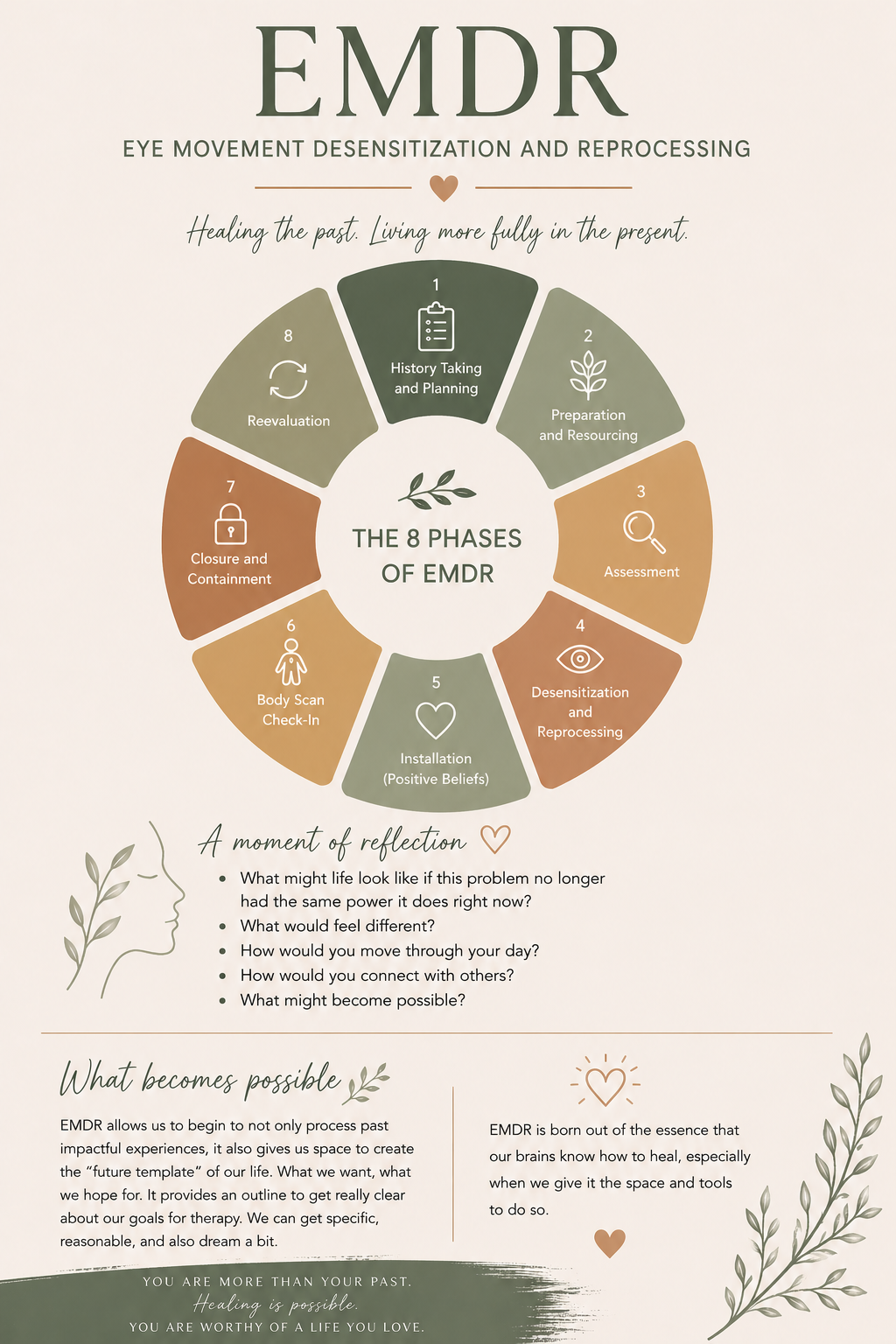
EMDR follows an eight-phase structure designed to support clients through each step of the process. These phases include:
History-taking and treatment planning and creating a target list (a roadmap for reprocessing)
Building resources and coping skills before reprocessing begins
Assessment and setting up the target to be reprocessed
Reprocessing experiences through sensory channels with the use of bilateral stimulation
Installing new positive beliefs
Checking in with body sensations throughout the process
Creating closure at the end of sessions, often through containment practices
Reevaluating progress over time
This structure helps ensure there is preparation, support, and grounding woven throughout the work—not just during reprocessing itself.
What Is an EMDR Target List?
Your target list is like a roadmap. It identifies the experiences that may be explored and reprocessed in therapy. These targets are often mapped through negative cognitions (core self-beliefs such as “I don’t have control” or “I’m not enough”), along with somatic experiences—what you notice and carry in your body.
Together, these pieces help clarify what feels unresolved and where healing work may begin.
Who Can EMDR Help?
EMDR can be especially supportive for those living with complex trauma or layered life experiences that still feel unresolved, stuck, and continue to weigh you down. EMDR can also be beneficial for someone who has experienced a recent hardship, or someone who feels tangled in complex grief. This may include:
Childhood experiences
Relational wounds
Recent distressing events
Experiences from adulthood that continue to affect the present
Miscarriage
Birth trauma
Often, these experiences continue to shape how we think, feel, relate, and move through the world—even long after they’ve passed.
A Reflection
If it feels supportive, consider asking yourself:
What might life look like if this problem no longer held the same power it does right now?
What would feel different?
How would I move through my day?
How would I connect with others?
What might become possible?
These questions can begin opening space for possibility.
EMDR and the Future Template
EMDR is not only about processing past experiences, it also creates space to imagine and strengthen a “future template”: a vision for how you want to live, relate, and respond moving forward.
This can help bring clarity to therapy goals while making room for both practicality and hope. We can get specific. We can be realistic. And we can also allow ourselves to dream a little.
At its core, EMDR is rooted in the belief that the brain and body hold an innate capacity for healing—especially when given the right support, space, and tools.
EMDR Key takeaways and Resource
